
From Foodscapes to Policy: How Research Became Public Action
In October 2025, Montpellier Méditerranée Métropole made history. With the adoption of the Food Landscape Transformation Strategy (PALM), the Metropolitan Council became the first local authority in France to formally approve a comprehensive public policy dedicated to transforming food environments.
At a time when food-related public health challenges, social inequalities, and climate pressures increasingly intersect, PALM represents a decisive shift. Rather than focusing solely on individual dietary choices, the strategy addresses the structural conditions that shape how, where, and what people eat.
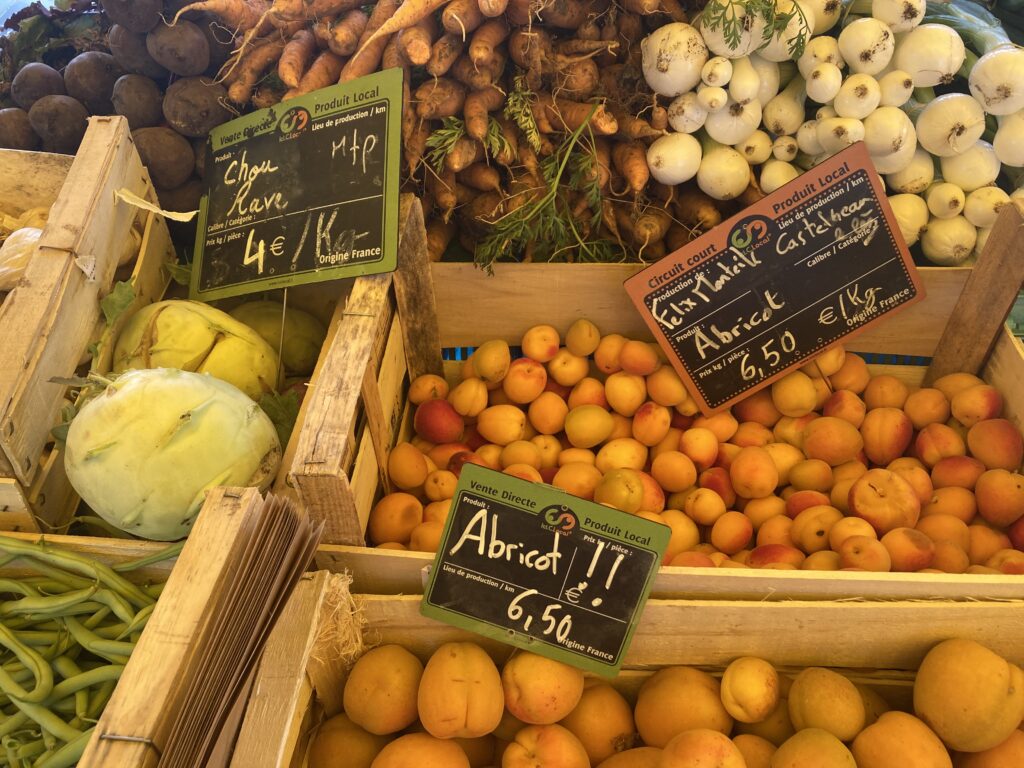
Food landscapes—also known as foodscapes—include all the physical and symbolic spaces through which people access food: markets, shops, restaurants, food aid services, community gardens, as well as the advertising, visibility, and mobility systems that connect them.
Research has consistently shown that these environments strongly influence dietary practices and health outcomes. In low-income neighborhoods affected by food deserts or food swamps, food environments often reinforce inequalities, limiting access to healthy and sustainable diets.
PALM directly responds to this challenge by treating food access not as an individual responsibility, but as a collective design issue—one that can be addressed through urban planning, governance, and public policy.
The PALM strategy is the result of several years of collaboration between the Metropolis, the scientific community, and civil society. It builds notably on the FoodScapes research project (2017–2022), which analyzed food environments and dietary practices across the metropolitan area from multiple perspectives.
Embedded within Montpellier’s Agroecological and Food Policy (P2A), PALM aims to improve access to high-quality, sustainable food across the city of Montpellier and its 30 surrounding municipalities, taking into account social, cultural, and spatial diversity.
Crucially, the strategy is not a standalone food initiative. It is embedded within broader territorial frameworks, including: urban and commercial planning; health-promoting urbanism; social and solidarity policies: and mobility and territorial development.
Four Strategic Pillars for Change
PALM is structured around four core orientations:
- Ensuring a territorial network of sustainable food retail and distribution, particularly in underserved areas;
- Strengthening food democracy and social cohesion, especially in food deserts and food swamps;
- Supporting individual and collective behavior change, through education, experimentation, and citizen engagement;
- Mainstreaming equitable access to sustainable food across all territorial projects and policies, embedding food into planning and governance.
Together, these pillars provide a concrete roadmap for reshaping food environments at the city scale.
The Role and Impact of SWITCH Diets
The adoption of PALM was also supported by the European research project SWITCH Diets, which played a key role in translating scientific evidence into policy-relevant insights.
Through targeted knowledge synthesis and policy-oriented communication, SWITCH Diets helped frame food environments as a critical lever for sustainable diet transitions. A SWITCH Diets briefing document was distributed to all elected representatives ahead of the vote, directly contributing to political awareness and informed decision-making.
Importantly, SWITCH Diets is explicitly referenced in the official resolution, making PALM a clear example of research-to-policy impact at the local level.
Urban food transformation
By embedding food access into urban planning and public action, Montpellier sends a strong signal: healthy and sustainable diets are not only a matter of personal choice, but of collective responsibility and territorial design.
For SWITCH Diets, Montpellier stands as a flagship case—a city where research moved beyond reports and recommendations to become binding public policy, reshaping how food, health, sustainability, and social equity are addressed in urban spaces.
What if more cities designed their food environments for healthier, fairer diets?
Montpellier has shown that it is possible.