
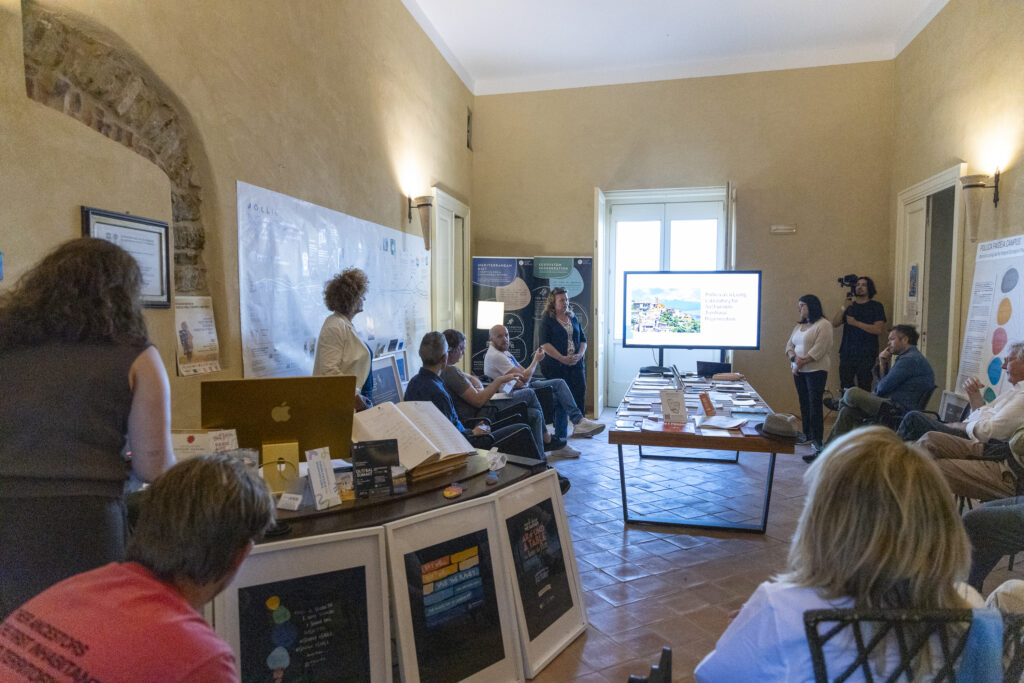
23 of May 2026, Pollica, Italy — The Horizon Europe-funded SWITCH Project continues to support Europe’s food systems transformation with the facilitation of an official UN Food Systems Dialogue.
Hosted in the UNESCO-recognised territory of the Mediterranean Diet, these initiatives reflect SWITCH’s mission to bridge scientific research, culture, and citizen engagement in building healthier, more resilient, and regenerative food futures across Europe. Together, they reinforce Pollica’s role as a living laboratory for sustainable food innovation rooted in cultural heritage and community-driven transformation.
An Official UN Food Systems Dialogue in Pollica
As part of the United Nations Food Systems Summit Dialogues process, SWITCH and the Future Food Institute facilitated the official Dialogue:
“The Role of Art in Strengthening Scientific Dissemination and Citizen Engagement for Sustainable Food Systems”
The Food System Dialogue took place in Pollica, a territory deeply connected to the cultural and scientific legacy of the Mediterranean Diet, and explored how artistic and creative practices can strengthen public engagement with scientific knowledge and support food systems transformation.
Bringing together researchers, artists, educators, youth representatives, sustainability experts, civil society actors, and members of the SWITCH ecosystem, the session fostered interdisciplinary exchange around sustainability, nutrition, biodiversity, and participatory innovation.
The Dialogue focused on how storytelling, visual arts, cultural expression, and participatory experiences can make scientific knowledge more accessible, inclusive, and impactful for local communities.
Key themes included:
- Strengthening scientific dissemination through creative methodologies
- Citizen engagement and public participation in food systems transformation
- Food literacy and behavioural change
- Culture as a catalyst for sustainable dietary transition
- Connecting local Mediterranean heritage with systemic innovation
- Building interdisciplinary collaboration between science, art, and policy
Participants reflected on how creativity can help bridge the gap between evidence and action, making food systems transformation not only technically achievable but socially meaningful and culturally resonant.
The outcomes of the Dialogue will contribute to the broader UN Food Systems Summit process through the official Dialogue feedback report to be published on the UN platform.